



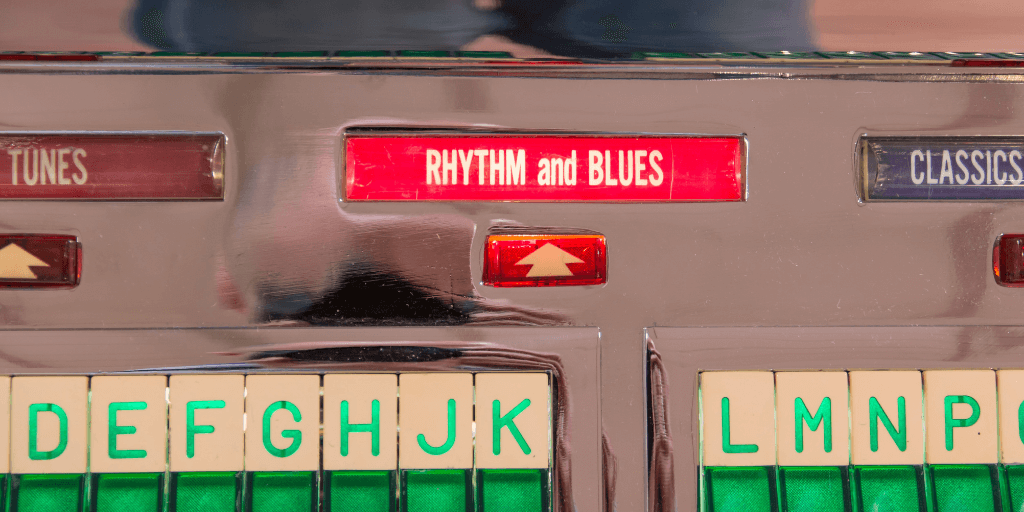
What happened to the jukebox? You remember it: the giant machine in the corner of your local pizza joint, its glass smeared and scratched from eager music-loving hands, the pages of oldies and top-40 hits that you flipped through with your friends. It’s always fun choosing your own songs.
While nostalgia is still tickled by the coin-operated music experience (and many locations still capitalize on the classic jukebox), today's social, mobile world has gradually influenced jukebox history and brought on a new wave of digital music services.
What is a Jukebox?
At its core, a jukebox is a coin-operated music player that allows customers to select and play songs in public spaces like restaurants, bars, and diners. The classic jukebox combined three essential components:
-
A coin mechanism that accepted payment
-
A selection system where users could browse and choose songs
-
Playback technology that delivered the music through speakers
Jukeboxes created a communal music experience. Unlike personal listening devices, jukeboxes turned music selection into a social activity where patrons could share their tastes, introduce friends to new songs, and shape the atmosphere of their favorite hangout spots.
This unique blend of personal choice and shared experience made jukeboxes cultural touchstones throughout the 20th century, and continues to inspire business locations today.
Here's how the jukebox evolved – from its earliest coin-operated origins to the digital era.
The Birth of Automatic Music: 1890s
1890
Louis Glass and William Arnold invented a nickel-in-the-slot phonograph with four listening tubes. This automatic phonograph built upon Thomas Edison's groundbreaking phonograph invention from 1877, which had revolutionized sound recording and playback.
Users would insert a coin and then crank a lever to play their tunes. These early machines appeared in phonograph parlors – businesses that offered recorded audio listening sessions.
The concept was simple but revolutionary: pay a nickel, select your listening tube, and hear music or spoken word recordings. The listening tubes were a necessity of the era's technology, delivering sound directly to the listener's ear.
1896
The first jukebox debuted at the Palais Royale in San Francisco. It was a four-tube model, and users were given towels to clean the tubes between listens – an early acknowledgment of hygiene concerns in shared public entertainment.
This marked the beginning of public, pay-per-play music entertainment as a viable business. The machine reportedly earned over $1,000 in its first six months, proving that Americans would readily pay for musical entertainment.
This success sparked interest among entrepreneurs and inventors across the country, setting the stage for rapid development in automatic music technology.
Early Innovation: 1910s-1920s
1918
Hobart C. Niblack created a machine that automatically changed records, marking a huge step in easy listening. Operators no longer needed to manually swap records between plays. This innovation addressed the need for constant manual upkeep with early phonographs. Niblack's mechanism could hold multiple records and rotate through them based on customer selection, fundamentally changing the economics of the jukebox.
1927
The Automated Musical Instrument Company, later known as AMI, created one of the first selective jukeboxes using Niblack's patented record-changing system. This innovation allowed customers to choose specific songs rather than accepting whatever record was currently loaded.
The ability to select from multiple options transformed the jukebox from a simple playback device into an interactive entertainment experience. Customers now had agency over their musical environment, a concept that would become central to jukebox appeal for decades.
1928
Player piano manufacturer Justus P. Seeburg brought his expertise in automated musical instruments to the jukebox industry. Seeburg had spent years perfecting the complex mechanisms that allowed player pianos to automatically perform music, and this background proved invaluable in jukebox development. He melded an electrostatic speaker with a coin-operated record player, creating the Audiophone.
Seeburg's background in player piano mechanisms influenced his approach to jukebox development, emphasizing reliability and selection variety – principles he'd learned from years of creating instruments that needed to perform flawlessly in public settings.
The Audiophone featured eight separate turntables on a Ferris-wheel-type device, allowing listeners to choose between eight records. Seeburg soon created the Selectophone, which featured 10 vertical turntables and greater song selection, pushing the boundaries of what automated music machines could offer.
1930s
Most phonographs featured dance records to life people's spirits post-Great-Depression. European distributors provided classic songs and orchestral recordings. Jukeboxes became fixtures in social gathering places during the difficult economic times. The machines provided affordable entertainment, democratizing access to music that might otherwise require expensive concert tickets or home phonograph equipment to enjoy.
.jpeg?width=390&height=585&name=retro-juke-box-radio-isolated-on-white-background-2026-01-08-01-01-59-utc%20(1).jpeg)
The Golden Age of the Jukebox: 1940s–1950s
1940s
Americans started throwing the terms "jukebox" and "juke joint" around in conversation. Juke – translated as rowdy – came from the Gullahs, a group of African American descendants of slavery who spoke a form of Creole in the Southeastern U.S. The name caught on, and jukebox popularity soared.
Jukeboxes became critical to the music industry itself. At their peak, jukeboxes consumed nearly 60% of all records produced in the United States. Jukebox operators were among the largest purchasers of records, essentially serving as tastemakers who could make or break new releases – much like Rockbot’s expert Music Curators.
A song that performed well on jukeboxes across the country could launch a career, while those that failed to capture jukebox audiences often disappeared into obscurity.
World War II temporarily impacted jukebox manufacturing as factories shifted to wartime production. Many existing jukeboxes were kept in service far longer than normal, with operators repairing and maintaining machines through the war years. When manufacturing resumed after the war, years-long demand led to a boom in jukebox sales and innovation.
Despite the war and delayed manufacturing, the 1940s through the 1950s would become known as the golden age of jukeboxes, with peak units reaching 500,000 across America. No bar or diner was complete without one.
Jukeboxes helped shape the emerging popularity of rock and roll. They gave new artists exposure and allowed regional hits to spread beyond their local markets. A patron in New York could hear the same record that was popular in a Mississippi juke joint.
The jukebox essentially democratized music promotion, letting customers decide what became popular. Artists like Elvis Presley, Chuck Berry, and Little Richard were discovered and promoted by the masses through jukebox play.
1949
The introduction of the 45rpm record revolutionized jukebox capacity and durability. These smaller, more durable records allowed jukeboxes to hold more selections in the same space, vastly expanding the musical choices available to customers. The 45rpm format was more resistant to warping and damage than the older 78rpm records, reducing maintenance costs for operators and ensuring better sound quality over time.
1953
Seeburg rolled out the snazzy M100C, the exterior of which could be seen whenever the credits rolled on Happy Days. Think bright colors, chrome, glass, and mirrors. The machine played fifty 45s, allowing for 100 songs in its roster.
This model represented the pinnacle of jukebox design. It was mechanically sophisticated and visually stunning.
The Rock Era and Beyond: 1960s-1970s
1967
Rock-Ola introduced the 434 Concerto, the jukebox featured during the Happy Days intro sequence. It ran a lot like the Seeburg M100C, with 100 plays, but featured an updated playback system that delivered clearer sound quality and improved reliability.
1970s
Jukeboxes were the norm in bars, diners, and recreation halls across America. The Kinks recorded the song "Jukebox Music" for their album Sleepwalker. The song celebrated the jukebox as a cultural institution, reflecting how deeply embedded the machines had become in everyday social life.
Technological advancements in the 1970s and 1980s transformed jukebox capabilities. Manufacturers introduced microprocessor controls that made selection systems more reliable and responsive. Touch screen interfaces started appearing, replacing mechanical buttons with digital displays.
Sound systems improved noticeably, with better amplifiers and speakers delivering higher fidelity audio. These improvements kept jukeboxes competitive even as home stereo systems developed and became more affordable. Yet even with these advances, the fundamental appeal remained the same: the social experience of choosing music in a public space.
The Digital Revolution: 1980s-2000s
1986
The first CDs and CD players officially reached the United States in 1983, and by 1988, sales of CDs had surpassed those of vinyl. Seeburg released a CD jukebox in 1986 that could hold 60 CDs. CD technology offered several revolutionary advantages over vinyl records.
The sound quality was superior – no pops, clicks, or degradation from repeated plays. CDs provided greater storage capacity, with a single disc holding up to 80 minutes of music compared to vinyl's 20-25 minutes per side. CDs were far more durable than vinyl, resisting the wear that eventually degraded record quality.
Vinyl maintained nostalgic appeal for decades among collectors and enthusiasts. The transition to CDs signaled the beginning of the digital age for jukeboxes, paving the way for more sweeping changes to come.
1998
TouchTunes introduced an internet-enabled digital jukebox in North American bars and restaurants. Other players in the digital interactive media landscape, such as eCast, appeared as well. These digital jukeboxes connected to the internet, offering essentially unlimited song catalogs stored in digital libraries rather than physical media.
2001
Apple launched the first iPod, putting on-demand music in the palm of one’s hand. This shift toward personal, portable music devices began changing how people thought about music access and ownership.
2008
Spotify launched, providing users with access to millions of on-demand songs in the cloud. With this development, people came to expect instant access to virtually any song ever recorded. Consumer expectations for on demand music changed forever.
The Modern Era: Reinventing the Jukebox
2010
Rockbot launched the world's first mobile jukebox app, allowing users to select their own songs at Bar Basic in San Francisco. By providing a licensed business music service, Rockbot replaced the bar's digital jukebox and background music service, solving the tension between customer choice and business control. While our solution has evolved beyond these digital jukebox roots to encompass a full suite of in-location media offerings, Rockbot Request continues to boost visitor engagement for businesses across industries.
The Future of Jukeboxes
What is the future of the jukebox? The jukebox continues to evolve in our smartphone and social media world.
Classic jukeboxes remain beloved by collectors and nostalgia enthusiasts. Restoration specialists keep these mechanical marvels functioning, preserving the craftsmanship and design aesthetics of the golden age. Museums and retro-themed establishments display these machines as both functional equipment and works of art, celebrating their cultural significance.
Even if they focus on nostalgia, today's venue operators need comprehensive in-location media solutions that combine the engagement of customer music selection with the control and curation businesses require.
The modern landscape demands integration across multiple channels. Music must work in tandem with digital signage displaying promotions and information, TV content that fits the venue's brand, and messaging that communicates with customers. These elements need to function as a cohesive whole rather than separate, uncoordinated systems.
The evolution of offerings like the Rockbot Request app addresses the historical tension that has always existed in jukebox history: how to offer unlimited selection while maintaining business control and encouraging customer engagement.
Customers get access to millions of songs through their smartphones; businesses keep the atmosphere they've worked to build (i.e., teams can limit the songs that are available to visitors so sound stays on-brand). That balance – personal choice meets business control – is the same one that made the original jukebox such a fixture of American social life. It just looks a little different now.
Looking to bring that spirit into your business? Explore Rockbot's in-location music solutions.
Thanks to Rockbot Music Curator Khushi Ramlogun for her collaboration on this article.