



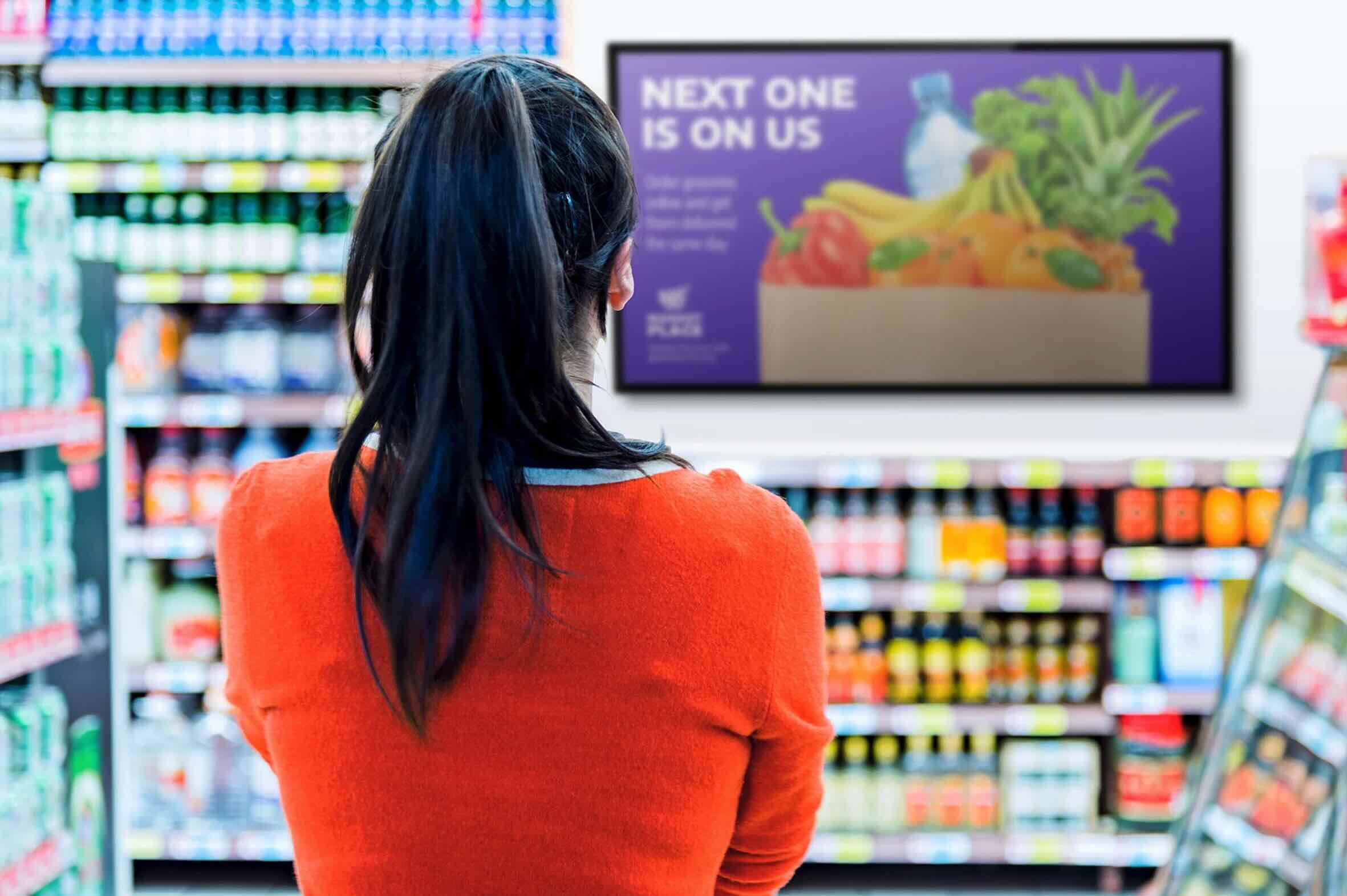
Digital signage for grocery is upturning traditional merchandising principles across the industry. In response to financial pressures and ever-increasing competition, grocers are quickly pivoting from print-based promotions towards digital touch points.
In-store media is and will be one of the most critical growth levers for grocery retailers in the coming years. Consumer expectations are motivating this change and driving grocery stores to uplevel customer experience (CX).
Recent consumer data from McKinsey shines a light on shifting sentiment: shoppers are online more than ever (including Gen Z who prefer grocery delivery at a larger margin than any other generation) but trust is lacking and purchases are being put off due to economic uncertainty.
The solution? Grocers need better ways to engage and understand consumers in order to succeed.
In a market where consumers have more choices than ever, onsite digital technology is capable of setting grocery brands apart. Given that 90% of all shoppers now purchase groceries using both online and in-store channels, an omnichannel approach to sales and marketing becomes essential to growth.
The Business Case for In-Store Digital Signage
The shift to digital in-store signage for grocery is being driven by consumer demand and potential ROI. Grocers’ commitment to enhancing in-store experience is proportional to the massive global market opportunity, as the food and grocery retail market is projected to reach $14.7 trillion by 2030.
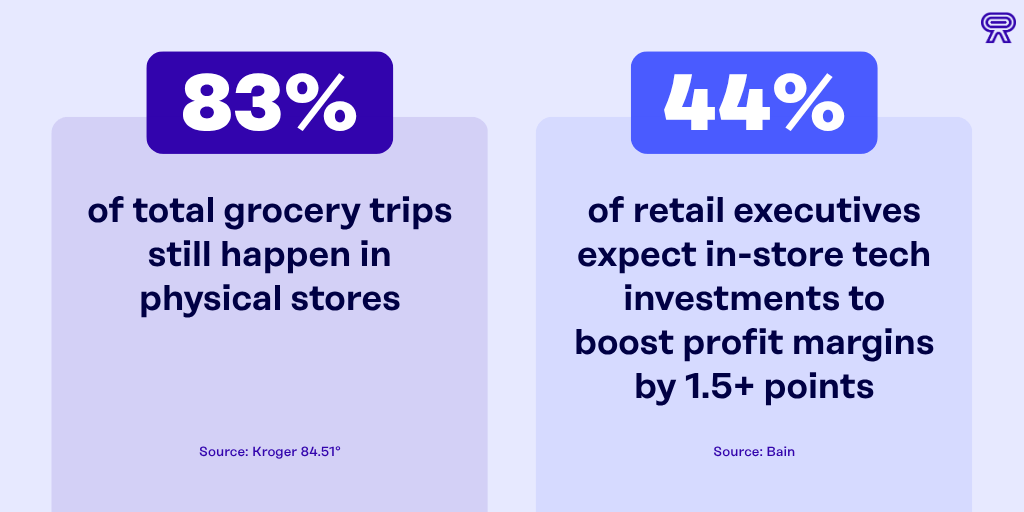
Financial leaders are highly optimistic about the impact of in-store digital enhancements. Nearly half (44%) of retail executives believe investments in in-store technology will directly boost their profit margins by 1.5 percentage points, achieved through improved customer engagement, operational efficiencies, and new monetization opportunities.
This confidence is further supported by consumer behavior: Despite the rise of online ordering, shoppers still make 83% of their total grocery trips in-store.
Research from Kroger's 84.51° reveals that these in-store visits are primarily motivated by the desire for control: shoppers want the ability to confirm product availability (45%), as well as seek sales and promotions (43%) and choose fresh selections (42%).
Digital in-store investments should focus on addressing these specific, high-priority motivators to maximize foot traffic and basket size.
The Role of RMNs
To take advantage of this dynamic, grocery leaders are turning to solutions that put relevant information directly in front of the consumer as they shop. This, in turn, creates the opportunity for grocery brands to leverage retail media networks (RMNs) that unlock new revenue streams, using shopper data and consumer insights to serve targeted advertising.
Forward-thinking brands like Sam's Club are pioneering this evolution by testing and implementing new checkout technologies with no registers in the U.S. By creating a digitally enhanced environment, the industry attempts to confirm that digitally engaged shoppers will linger longer and also spend more, both during their visit and over time.
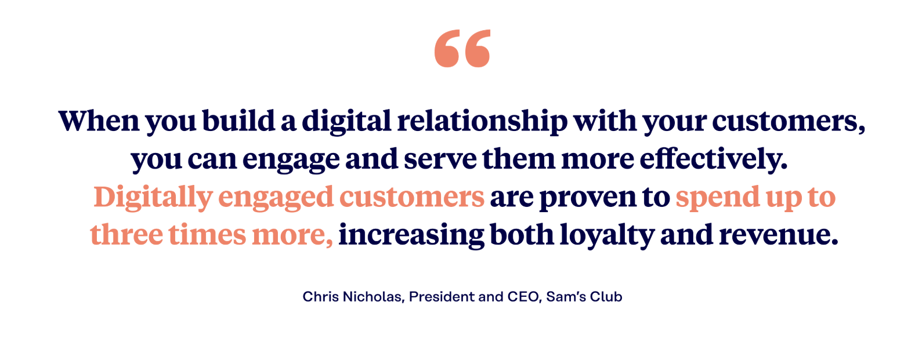
One caveat: Any results from RMN will be fleeting without solid consumer trust. In-store grocery brands have the opportunity to build relationships with shoppers that simply aren’t possible online.
Critical Trends Shaping the Future of Grocery
Thought leaders at major industry events like Groceryshop 2025 highlight four key areas that are shaping the future of the grocery shopper experience.
1. Responsive, Unified Commerce
Grocery is a uniquely complex category due to perishability, cold chain logistics, SKU complexity, and order weight – for this reason, it may not reach the digital penetration of sectors like consumer electronics or books.
However, integrating in-store and digital experiences is the “new normal”, since for shoppers, these channels are not distinct.
-
Omni-Channel as Table Stakes: Marrying in-store and online strategies is quickly becoming table stakes, and shoppers will be scarce if this has not been implemented in some way.
-
Adaptive Technology for Real-Time Impact: Grocers are beginning to embrace flexible tech that allow teams to blend digital signage, music, audio messaging, and personalized media at the point of decision-making. Stores can now adjust promotions, offer product recommendations, and enhance in-store offers dynamically based on real-time conditions like time of day, weather, inventory updates, and discounted pricing.
-
The Super App Model: Just as a super app provides multiple services, companies like Uber are stimulating growth by combining digital and physical experiences. The partnership between Uber and Walmart, as an example, facilitates over one million rides per month to and from the store, helping both businesses drive results.
2. Personalization and Meaningful Customer Experiences
Consumer expectations, particularly from Gen Z and Millennials, center around personalized, frictionless shopping:
-
Identity-Driven Shopping: For Gen Z, brands are intertwined with personal identity and lifestyle, even extending to how they think about food. Relatable companies inspire purchases that this generation see as a reflection of who they are. For this reason, the focus for grocers shifts from selling to connecting.
-
Frictionless Loyalty: Premium brands like illy are moving beyond discounts to drive loyalty, offering experiential discounts with partner hotels, restaurants, and cafés. Illy recognizes every cent spent across channels (online/offline, grocery, cafés/HORECA) so customers are incentivized to spend and the experience is user-friendly.
-
In-Store Tech Shapes Behavior: The most powerful in-store technology brings the digital and physical worlds together by using media, including music and dynamic visuals, to influence customer mood and decision-making. Data gathered as a result can help grocers personalize future customer visits.
3. Retail Media and Expanded Data for Increased Revenue
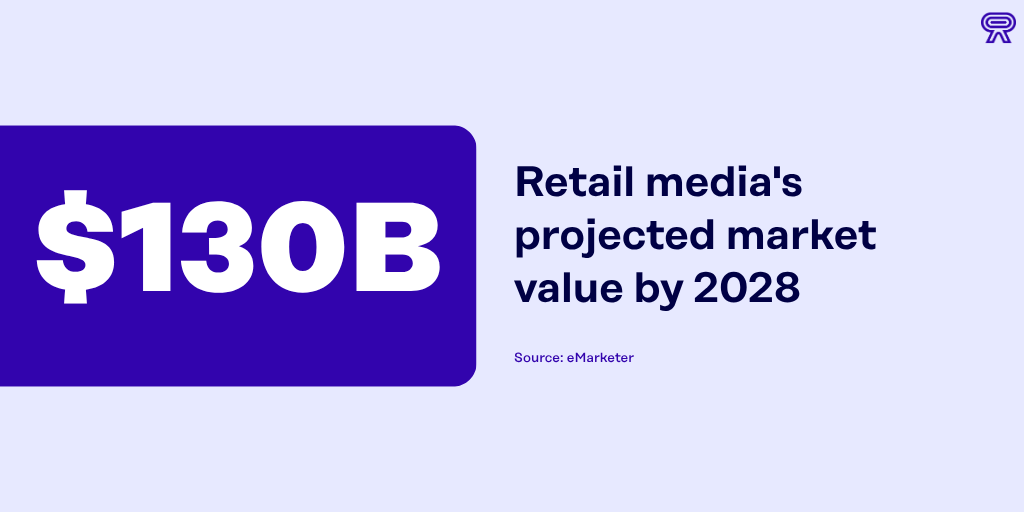
Retail media is the fastest-growing ad market, estimated to reach nearly $130 billion by 2028, which unlocks new revenue opportunities for grocery stores:
-
New Revenue Streams In-Store: A physical grocery store can become important advertising real estate when companies partner with brands to deliver targeted in-store ads or promotions. RMNs maximize a grocers’ ability to leverage media for greater reach, whether through digital signage or audio.
-
Localization is the Next Frontier: Large retailers are beginning to focus on per-store dynamic pricing and content localization at scale, requiring solutions that can ingest store-level pricing and auto-render correctly – namely, a centralized content management system (CMS) and digital signage solution to manage and synchronize content across multiple locations.
-
Leveraging Rich Intelligence: The best customer experience (CX) feels personal. Media that includes rich data intelligence allows grocers to serve only the most relevant offers dynamically.
-
In-Store as a Strategic Priority: Forward-thinking grocers like Walmart, Schnuks, and ShopRite are rolling out digital shelf tags that can ping shoppers when they are searching for products on their mobile app in-store. A positive upside? Reduced food waste.
The Path Forward for Grocery Stores: Unified Media Planning
For grocers that want to take action on these trends, unified media planning is essential. Digital signage may be a first tactic, but strategy around programming, budget, and partners will ultimately determine the success of any new initiative – especially when it comes to the evolving landscape of retail media.
-
Aligning Internal Silos: Retailers need to balance interdepartmental budgeting with existing (and needed) resources, skillsets, and data to implement a unified media strategy. Given the number of variables (i.e., which screens, how many, where they go, and what they play), confusion over which budget to allocate makes sense.
-
Sales vs. Marketing Balance: Weighing grocery store marketing strategy against sales-focused approaches can be challenging. While successful sales provide the revenue that justifies the program, if marketing scales back too far, brand awareness can suffer. Email marketing and special promotions are useful approaches to support both immediate sales and long-term loyalty.
-
Partner Agility: D2C brands tend to have a closer connection with their customers, allowing for faster adjustments to key feedback. CPG brands, on the other hand, often rely on distributors and retailers, which creates a layer of separation from the end consumer (and thus, limited responsiveness). An expert partner that can power your CX and enable you with the right intelligence is critical.
Potential complexities are exacerbated by concern over inflation, which has led shoppers to actively seek deals on every purchase – in this landscape, dynamic pricing and promotion are essential to securing the sale.
The Next Generation of Media-for-Business Technology Is Here
Rapid advancements in the media-for-retail industry have made it easier to expand store offerings to include digital signage. Unfortunately, retail businesses continue to struggle with unreliable legacy media systems – siloed systems that can’t integrate, and are thus unable to evolve the customer experience.
Benefits of newer systems include:
-
Advanced Capabilities: Digital signage can provide real time information on product arrivals, new items, and flash sales, encouraging impulse purchases and promoting high margin items. Grocers are also exploring digital sensor capabilities that can track demographics, mapping, traffic flows, and user re-identification across screens.
-
Centralized Control and Savings: Digital signage can save time and money by allowing businesses to refresh content instantly and remotely from a central location. Digital signage can also be used to display store hours and other essential information to keep customers informed.
Some of the largest grocery retailers are leveraging rich intelligence to provide a seamless CX across TV, digital signage, and music, with notable success. The next generation of in-store touchpoints to bring your brand to life and connect with your shoppers is here.
Build for the Future of Grocery CX
Today’s grocery shoppers expect seamless digital experiences, personalized shopping options, convenience in delivery and pickup, and sustainable business practices. Capturing their attention and engaging them in-store through strong connections is the key to building deep, lasting loyalty.
Rockbot is the leading media platform for companies that bring their brands to life with digital in-location experiences. Our unified solution offers customized music, TV, digital signage, and advertising services to nearly 50,000 locations, including the largest brands like Walmart and Sam's Club.
Ready to uplevel in-store experience for your grocery brand? Innovative digital strategies can help your grocery store stand out in a crowded market. Schedule time with our team.